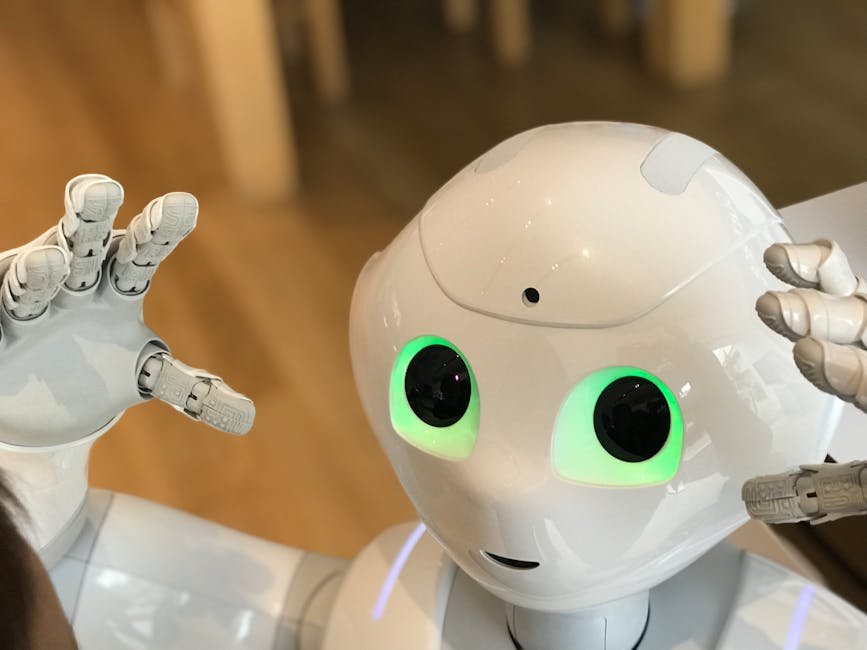
The world of artificial intelligence continues its relentless march forward, delivering a constant stream of breakthroughs and innovations that are reshaping industries and daily life at an astonishing pace. From sophisticated language models to advanced robotics, the news cycle is perpetually buzzing with updates, making it clear that AI is no longer a futuristic concept but a present-day reality rapidly integrating into the fabric of our society. Keeping up with these developments can feel like a full-time job, as each week brings new capabilities and discussions to the forefront.
One of the most significant areas of recent AI news revolves around the extraordinary advancements in large language models. Tools like OpenAI's GPT series, Google's Gemini, and Anthropic's Claude have captivated the public imagination with their ability to generate human-like text, translate languages, write different kinds of creative content, and answer questions in an informative way. These models are not just improving in their linguistic prowess but are also becoming increasingly multimodal, capable of processing and generating information across text, images, audio, and video, blurring the lines between different forms of digital communication.
Beyond the realm of conversational AI, the impact of artificial intelligence is profoundly felt across a multitude of sectors. In healthcare, AI is accelerating drug discovery, improving diagnostic accuracy through medical image analysis, and personalizing treatment plans for patients. The financial industry leverages AI for fraud detection, algorithmic trading, and risk assessment, while the creative arts are seeing AI assist in everything from music composition to graphic design, opening new avenues for artistic expression and efficiency.
However, the rapid progress in AI also brings with it a complex array of ethical considerations and societal debates. Discussions around job displacement, algorithmic bias, data privacy, and the potential for misuse of powerful AI technologies are gaining increasing urgency. Governments and international bodies are actively exploring regulatory frameworks and guidelines to ensure the responsible development and deployment of AI, aiming to harness its benefits while mitigating its risks.
Further advancements are evident in specialized AI fields such as computer vision and robotics. Self-driving car technology, while still facing significant hurdles, continues to make incremental improvements in navigation and object recognition. Industrial robots are becoming more agile and intelligent, capable of performing complex tasks in manufacturing and logistics with greater precision. Even in environmental monitoring, AI-powered systems are helping analyze vast datasets to track climate change and predict natural disasters.
Looking ahead, the future of AI promises even more transformative changes. Research continues into artificial general intelligence (AGI), the concept of AI that can understand, learn, and apply intelligence across a wide range of tasks at a human-like level. While AGI remains a distant goal for many, the ongoing pursuit pushes the boundaries of current AI capabilities, leading to innovations that enhance existing systems and pave the way for entirely new applications.
Ultimately, the constant flow of AI news underscores a fundamental shift in how we interact with technology and the world around us. From personalized recommendations on our devices to sophisticated systems managing critical infrastructure, AI is becoming an invisible yet indispensable partner in countless aspects of modern life. Staying informed about these developments is not just about understanding technology; it is about grasping the forces that are shaping our collective future.